Not so long ago on campus I was teaching a 4th year class where we were discussing learning, communication, and accountability. In this class, we were looking at Bloom’s Taxonomy with the aim to introduce students on how to create lesson aims and learning objectives. For context the students are working with an external client to provide a workshop using drama for health and well-being.
The students were asked to create a task for the other students to complete using one of the words from the taxonomy, to help articulate the aims of the activity. The words are categorised into knowledge, comprehension, application, analysis, synthesis, and evaluation. Within the categories there are verbs for specific aims. Such as in knowledge, a verb would be describe. For Comprehension it could be discuss. For application, perform, for analyse it could be explore, and so on.
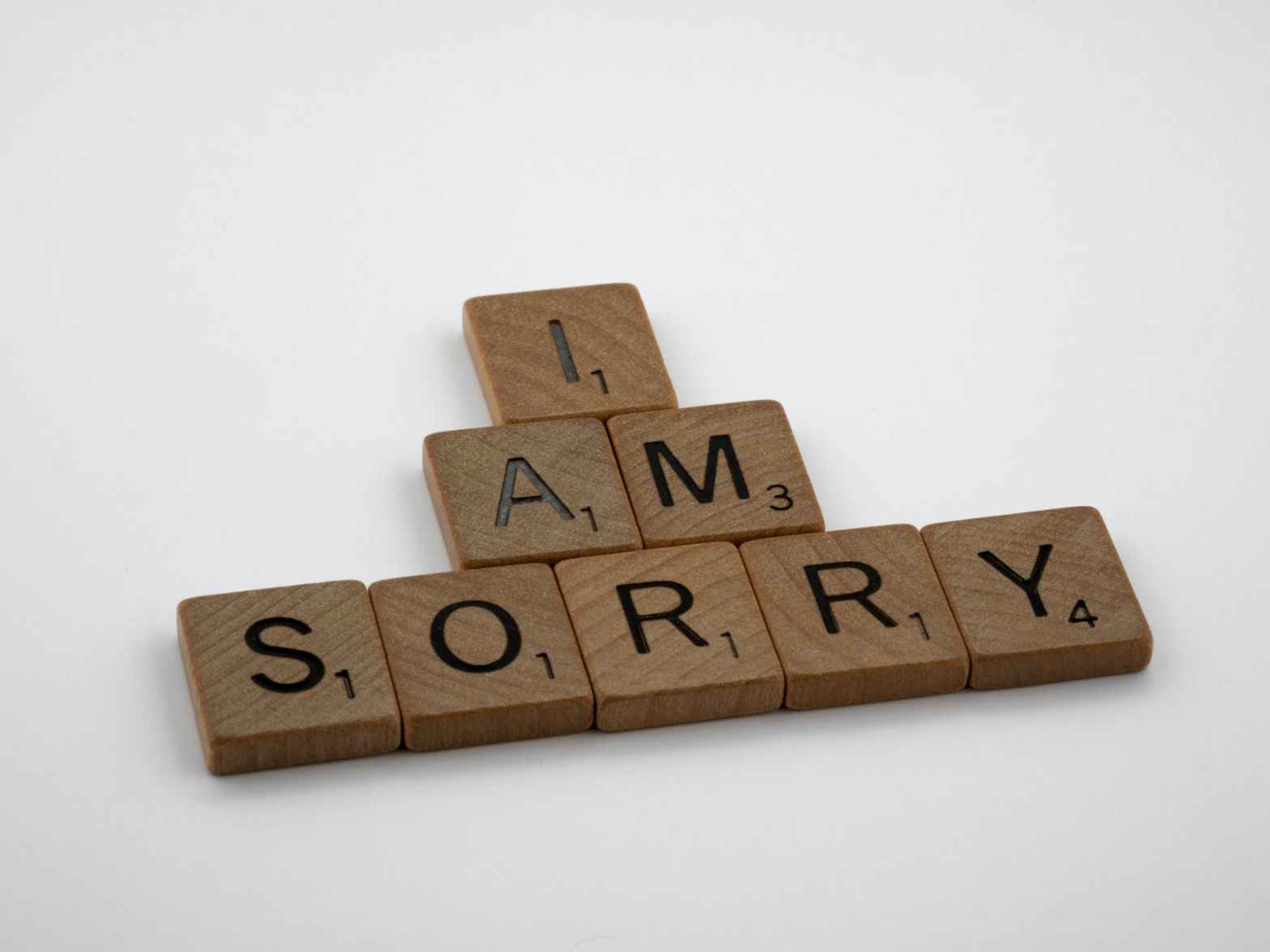
In doing so we got on to the topic of an apparent shift in societal relationships with saying ‘sorry’. There are discussions at the moment where people are opting to not say sorry in certain situations. Ultimately saying sorry less.
For example, rather than say “sorry I’m late.” You would say “thank you for waiting.” This is something that I have done in the past but in discussing with students, I won’t do anymore. Here are the reasons why.
In my mind, by saying “thank you for waiting” I thought I was doing good, so to speak, as I was acknowledging the students were waiting. However, in doing that, I don’t acknowledge my error. The fact I’m late. The fact that my actions have made my students have to wait. There is no accountability of self. This is why I now say, sorry for my lateness (on the occasions that it happens!) AND thank you for waiting.
Another example along the same thread is when someone, as a way of apology, following a mistake or argument, says “I’m sorry you feel that way” rather than have the acknowledgment that they made the person feel that way. “I’m sorry my actions made you feel that way.” The first one mitigates the accountability. Now I know some of you may think “ah but I didn’t do anything wrong.” Or “other’s feelings aren’t my responsibility” and you’re right to a degree. You may not have thought you’ve done anything wrong, or you’ve not intended to upset, offend etc, but my thinking is, if someone comes to you with their feelings, you have a choice as to how you respond. I should say, this is all judged on a case by case. I think it comes down to two things, accountability, and validation.
For example, if a student comes to me and says, “I’m upset over a mark you’ve given me” my response is “I’m sorry that the mark I’ve given to you has made you feel upset.” Then go on to explain the reasons why. I don’t want to invalidate what they are feeling.
I believe it’s so important to be able to be accountable for our own actions. After all that is one of the few things we can control. We can’t control what others think, what others feel, or how others respond. But we can control our own actions and responses.
Maybe part of the challenge with all of this is how difficult it can be to say sorry, or to apologise. So, I’ve whittled it down to the following reasons of why I think it might be difficult.
- Is it fear that the apology will be rejected? The person apologising won’t be forgiven. Let’s face it, no one likes rejection!
- Is it a power thing? The person who needs to apologise may feel that in doing so they lose status or power.
- Is it a vulnerability thing? Similar to the above, the person apologising is unable to feel that exposed. This links in with ideas around feeling embarrassed or ashamed of their actions in the first place, so the apology seems even harder.
- Is it that people are just unable to say sorry because they feel inadequate in doing so? It highlights their failings and/or mistakes.
- Is it a denial thing? If the person doesn’t say sorry, then they haven’t done anything wrong. If there is no admission of guilt, then there is no need for accountability.
I remember a drama teacher of mine back in my undergrad days saying, “sometimes you just have to fall on your own sword”. Meaning that when it comes to apologising, it’s not always about you as the apologiser. It’s just as much about the other person who needs the apology. In this context, I was doing some filming for a project and was permitted access on a weekend to an office. I was new at the whole filming thing, but myself at the cast and crew (approx. 12 of us) got on with our day. We had moved things about, and we all worked together to make sure things were back in the right place. I took the word of everyone there that things were good. When I got back to uni on Monday, I had a very angry email from one of the lecturers in the office who reported that things were missing from their desk. I felt sure things were back where they should have been. However, after much back and fore, I had to acknowledge that me not checking everything had caused the issue. So I put my hands up and said sorry. She found the things she thought were lost later in the day. They had been placed on another desk. And that was the end of it.
So, that’s what I mean. Falling on your own sword. Sometimes you just have to put your hands up and say, yup – it was my fault. And in my opinion, with all mistakes, as long as you don’t repeat them and learn from them, it shouldn’t (in an ideal world) cause that much stress.
Do you struggle to say sorry? Do you know why?
Have you found it difficult to say in the past?
Post a comment and let me know.
As always would love to hear what your ponders are on today’s blog. Feel free to post a comment, and if you’d be so kind, pop over to the socials and give a wee follow and a like. It’s greatly appreciated! You can also let me know if you have a ponder topic, you’d like me to write about. Suggestions are always welcome!
This has been a SmartPonders.
Thanks for reading.
Steph x
 SmartPonders