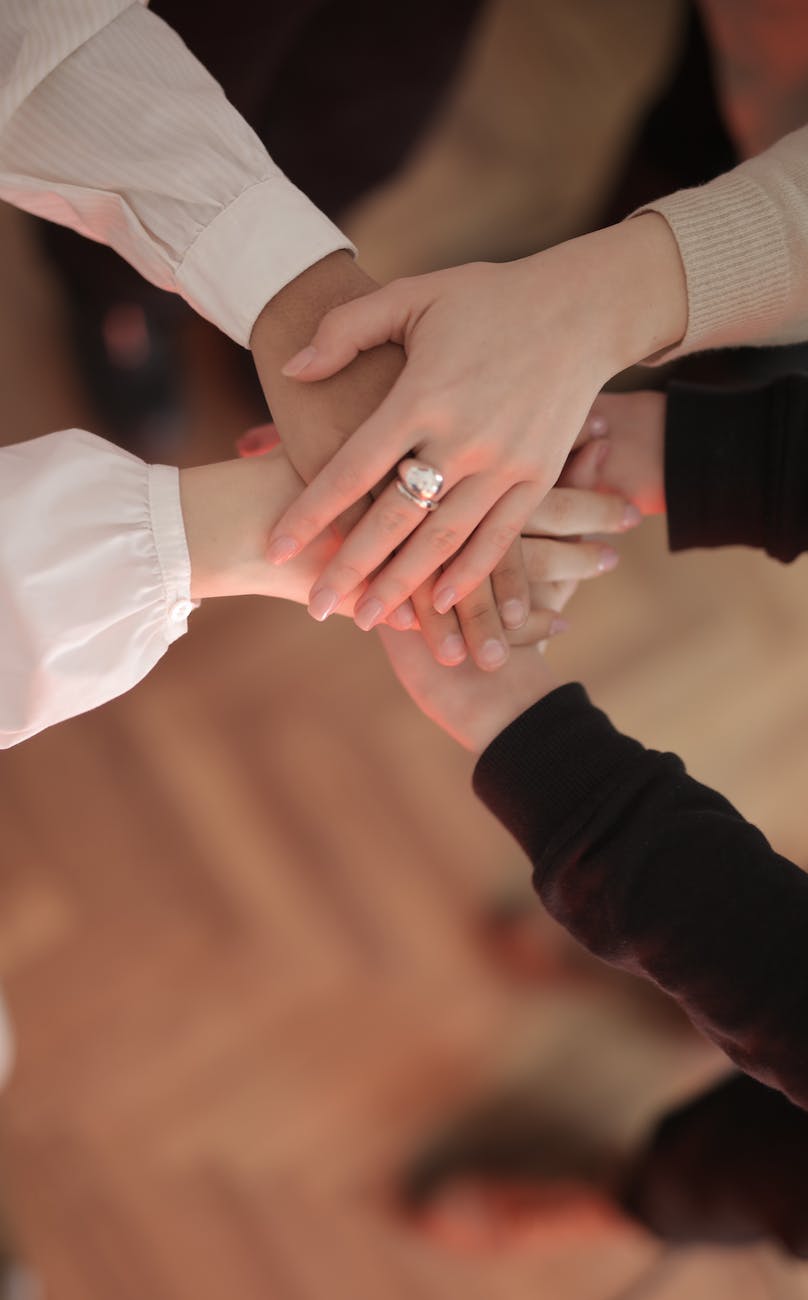
As a theatre practitioner and educator there are many crossovers in how I work with people to facilitate and empower their learning. Whether I’m putting on a musical with a local theatre group, or training new students in the performing arts, there are five key principles I carry everywhere that inform my professional practice. Principles which I believe are the fundamental pillars to creating a safe space. These principles in turn produce moments of magic with people. Let me set the scene first with an overview of these principles.
1. Collaboration – I believe in collaborative process – everyone has a part to play, and everyone takes a shared pride and ownership in the work we create.
2. Trust. We all have to trust each other to show up, to do the work and to try new things. We also have to trust each other to speak up when there are challenges. Which leads me to three…
3. Communication – As experienced an educator I am, I’m not a mind reader. Students are reminded of this. I can’t help if I don’t know there is help required. Equally, communication is about building confidence to be able to articulate ideas, thoughts, and feelings, which in a drama studio is pretty crucial. One of my favourite questions is “what did you see, what did you think, what did you feel?” Facts, into opinions, into subjectivity.
4. Accountability – this can be a hard one. With the best will in the world, some people will never accept their own action or indeed inaction as being a factor in situations they find themselves in. Example. Students are required to do tasks prior to class. These prep for class tasks ensures students are provided the opportunity to gain prior knowledge. A grounding that can be built on in the sessions. A student who makes the decision to not do the prep, then has two options. They can try to blag their way through the class but feel a little lost and not get as much out of it as their peers, or they are open and honest and say, actually I didn’t do the prep and explain why. I know which option I respect more.
5. Safety – This one is huge, and it’s still something I’m learning and unpacking. What does it actually mean to have a safe space? How do we create a safe space to work in? First and foremost, it’s about feeling psychologically and emotionally safe in a space. There are no threats, there is no danger. People are supported and encouraged to be themselves. There is no fear of humiliation, embarrassment, or punishment. There are boundaries and expectations of course, most of which are common sense – be respectful, supportive, listen etc. It’s a space where communication, contribution and challenges are valued, and where failure is treated as key learning. I’ll say it again, when a toddler is learning to walk and fails that first time, they don’t roll over and believe walking is no longer for them. They learn something new from each failure. Safe spaces that bring trust and honesty can lead to a real sense of identity and belonging. In a place where technology and societal pressure rule, we need to go back to basics in how we are together physically in a space and because of that, a safe space is paramount.
The transformations that I have been witness to over the years are incredible.
Example A.
August 2017
It was 2017, my first year of lecturing and it was induction. Induction is when we bring all our drama students, new and returning, into the space together to create, devise, listen to talks and of course meet each other! It’s a full-on couple of days and we can have seventy plus students in the studio together. I was midway through introducing the plan for the two days, when the studio doors opened, and a young man entered. He quickly shuffled to the front row and sat down. Avoiding eye contact and clearly anxious. After five minutes, he got back up and bolted out the same door he came in. My colleague took over and I went to check on him. He was having a panic attack and the sense of overwhelm he was feeling was huge. So, we sat down and talked. I learned more about him, why he’d joined the programme, who is idols were etc, and he managed to calm down. I then presented options for him for his next steps. Did he want to leave? Did he was to come back in? We talked through the options. He decided to come back in, with the agreement that at any point he could give me a look and head out to get a breather – no questions asked. That same (but different!) young man graduated four years later with his degree is drama and performance. As educators we have a responsibility to our students (and indeed as humans to humans!) to never underestimate what a person is capable of in the right environment.
Now, I’m not saying every student I have had has made it through. Sometimes with the best will in the world, the timing, context, and adjustments made just aren’t enough. And that’s ok too. Sometimes it is right place, wrong time. But when it’s right, it’s incredible…
Example B.
September 2023
I was teaching a group of students on the foundation level courses we have. The class is made up of both a full-time cohort, and a collection of students from across the Highlands who get released from school to come to me on a Friday. Both groups are only together on a Fridays. I have them for two modules. This was the first week that both groups of students were together, and the second week where the eleven strangers that made up the school group were together. Bonds and relationships are beginning to form. In the class is a deaf student who uses a BSL interpreter. It was their birthday. The ten other students, when they found out, asked the interpreter secretly to teach them how to sign Happy Birthday in order to surprise the student. They then went and bought a card, and all signed it. Whilst I had already planned to do something similar in the afternoon, they’d beaten me to it. Unprompted the students begun singing and signing happy birthday and it was one of the most wholesome things I’ve ever seen. To the point the other students wanted to learn too. So of course, a second round of the song was needed. It’s week two.
This is safety. This is what it means to belong.
Now, some people reading may think, ‘pfft, no big deal.’ But it is. When was the last time you did something kind for a stranger?
When we create and cultivate safe spaces, amazing things happen. So, whether it’s a learning environment, a club you go to, or a workplace – ask yourself
– how safe you feel there?
– To what extent do you feel like you belong there and are accepted?
Safety doesn’t happen overnight. It’s a process. But I genuinely believe that when we take the time to ask challenging questions, look outward and look inward, and be prepared and willing to change, incredible things can happen.
What are your thoughts on safe spaces? Let me know in the comments. I’ll close this blog with one final reminder.
Be the change you want to see in the world.
Source: Arleen Lorrance, “The Love Project,” in Richard D. Kellough (ed.), Developing Priorities and a Style: Selected Readings in Education for Teachers and Parents (1974), p. 85.
This has been a SmartPonders.
Thanks for reading. x
 SmartPonders