As Autism Acceptance month comes to an end, this blog offers a deep, and vulnerable dive into what Autism is for me, exploring the areas of the spectrum and how the manifest and impact me. Now, whilst my diagnosis itself is fairly new, the Autism itself is not, because remember Autism is something we’re born with and is a neurodevelopmental condition, not a social media trend. However, I am still very much learning more and more each day about my neurotype. Since my diagnosis, identity crisis aside, it is like I suddenly have a new and improved understanding of myself, who I am and why I am the way I am. Although it has taken me a while to get to where I am today – five months on – it’s a wholly positive thing.
Grab a cuppa because this is a long one, it has taken me three weeks to write and I think this might well be the longest blog I’ve written to date! Let’s get into it.
What are the areas of the spectrum?
Before exploring what Autism is for me, we need to better understand the aspects of the spectrum.
Executive functioning is ‘the cognitive processes that help us regulate, control and manage our thoughts and actions. It includes planning, working memory, attention, problem solving, verbal reasoning, inhibition, cognitive flexibility, initiation of actions and monitoring of actions.’ (Bennie 2018)
Managing Changes can be hugely challenging for Autistic people. If you think about all the things going on in our brains, routines, rules, and managing our expectations can be vital to navigate the day. See more about Sensory Processing.
“Sometimes minor changes such as moving between two activities, can be distressing; for others big events like holidays, starting or changing school, moving house or Christmas, which create change and upheaval, can cause anxiety.” (NAS 2025a)
Social Interaction refers to the different ways in which Autistic people communicate with people around us. This includes verbal and non-verbal communication, eye contact, preference for direct communication. For some, they’ve been described as having ‘no filter’. And also, a preference to talk about our special interests – at length. This is also known as ‘info-dumping’. There is also a preference to avoid small talk, instead having deep and meaningful chats. Many of us also need processing time, so benefit from slower paced conversations. It can also be challenging for us to focus on conversations, especially when there are other sensory inputs – such as lights, sounds, temperature etc. (NHS Foundation Trust 2023)
Sensory Processing refers to the ways in which we interact with the world around us linked to our senses, which can manifest as HYPERsensitivity, HYPOsensitivity, or both. This means we will either avoid or seek out certain sensations. Such as visual (lights, motion), Auditory (sounds), Tactile (textures and touched pressure), Olfactory (smells), Gustatory (tastes, textures, and flavour of foods), Vestibular (balance and movement), and Proprioceptive (body awareness and where the body is in space). (Hatch-Rasmussen 2025, Autistic 2025).
Cognitive Flexibility is the ability to adapt and change our thinking and or behaviours. This can affect us in many different ways, but one of the most common is the challenge to switch between tasks and/or mental states. It may also affect the ability to see and understand other’s perspectives.
Anxiety which I’m sure many of us recognise is ‘a feeling of unease, such as worry or fear that can be mild or severe. It becomes a clinical condition when experienced for a prolonged period of time and when it has a significant impact on a person’s life.’ (NAS 2025b)
Structure, Ritual and Rigidity has some cross over with what I’ve mentioned already in relation to change and inflexibility, but it is common for Autistic people to need routine and structure in the day to day. For some, it may feel upsetting or unsettling when these routines are interrupted.
Whilst this list is not exhaustive, it hopefully serves as an introduction into what Autism looks like more specifically.
Talking of specific, let’s chat about how these traits manifest for me… because they do.
Trait’s I’ve Always Acknowledged
Before we go on, I feel it’s important to note that I have always acknowledged that I’ve been a little different, and that I have traits, but I never realised they were part of the Autism Spectrum. Such as the following –
- Little bit different
Going through life feeling like everyone knew what they were doing and knew how to be themselves. I did not and knew and felt that I did not, as if I didn’t fit a mould. - Issues with Packaging
Ever since I can remember, I have always had issues with being near and eating things directly out of packaging. I just can’t do it. For clarity, it’s tolerable when there is food in the packaging, but God forbid it’s empty. It’s the end of the world. To the point that my eyes will water, and I’ll boke aggressively until the packaging is removed and put in the bin. You will never see me eat crisps out of a packet, I will eat choc ices completely in my hands, and I have to put rubbish in the bin as soon as humanly possible. And God forbid anyone else is playing with packaging either. Like when people fold their crisp packs. Stop it. Boke. Just put it in the bin. - Highly Emotional
When I was growing up, Mum used to always remark how I must have had a swinging brick for a heart, because I would never be bothered or phased by emotional things on the TV or in film. Yet, when I started training as an actor, I went the polar opposite, to the point that I now feel everything intensely. It’s all intense, all the time. - Feeling and absorbing energies and emotions of others
This is a funny one, because whilst I’ve never known what it is, I’ve always known it’s there. When I am in a space with other people, I will be able to feel the energy and emotions in the room. Especially if it’s with a group of people I’m familiar with and there is a change or shift in what the expected energy is. What can happen here though, is when someone is in distress, I will feel that in my own body, like I am a sponge. It then will take some time – hours, sometimes days – for me to then regulate myself again. And no, it’s not as simple as putting boundaries in place. It’s an uncontrollable response. A programming that has me picking up every detail of every person. It’s a wild one. - Performing in day to day
Again, this is something that I’ve known that I do but have never managed to fully understand it until recently. Whilst I’m always myself, I’m a version of myself in each encounter I have. I become the person others need me to be in an exchange. And more often than not putting my own needs aside to favour meeting the needs of others. This, I now know, is Masking. It’s something most autistic people do – adapt ourselves to fit into the environments and contexts we’re placed in. It’s also a way in which we keep ourselves safe. However, I acknowledge that there are autistic people out there who can’t mask, and those who choose not to. Because to mask is an energy expense, that in the long run, is detrimental to our health and wellbeing. - Switching accents / Sporadic Song
For those that know me, will know it’s a regular occurrence for me to randomly switch the accent I’m using when I’m speaking. I have also been known to sing what I’m doing – a musical theatre style narration. Over time I’ve learned that this is not always wholly appropriate, nor appreciated, but know that the impulse and need to do it, is still there. It just happens in my head. But eventually, it needs to come out. - Cycles of burnout (ME)
Over my life, there are numerous occasions where I have ended up being off work or college or school because of burnout. When you think about it, it’s not all that surprising that these cycles occur. Let’s unpack.
An Autistic person is already experiencing the world in a heightened state, we’re then using more energy to mask, we’re also pushing through and suppressing our needs and feelings because it’s what we see others do. We force ourselves into frameworks and expectations that don’t fit us – forced into neurotypical norms. It’s not really a surprise then that our bodies eventually give way, and we crumble. - Hyperfocus
I get really intense periods of focus when working on things. Whilst it can be useful, it can also mean I shut out the world and lose a sense of time, space, and place. It can be hours, and hours, and then I notice I haven’t moved, or drunk anything, or eaten. It can also mean that I have difficulty being pulled out of the hyperfocus. This can manifest in irritability and even dysregulation. - Anxiety
Growing up, we never really spoke about anxiety. It wasn’t really a thing. But looking back it was definitely there. And I still have challenges today. Especially around the unexpected, not understanding things, not achieving things, and being worried about not following rules. Funny story – when I was younger 16/17, I may have participated in underage drinking. For the longest time, I was convinced I had an alcohol intolerance, because I’d feel so ill soon after having a drink. I became T-total from 17 years old until 22. It was only once I was at uni at 22 that I realised I didn’t have an intolerance at all. In hindsight, I believe this was anxiety manifesting around breaking the rules. - Special Interests
As part of the Autistic experience, we have special interests, also known as spins. These aren’t just hobbies. They are all consuming, and a huge source of comfort, support, and wellbeing. It might be physical activities, or collecting things, or seeking comfort with certain objects. For me, it’s always been acting and drama. And of late, Yoga! I have a teddy bear I’ve had since birth that to anyone else just looks like a ragged, holy pile of fluff, but to me is one of my comfort objects – yup 36 years old and I still have a teddy. - Cognitive Dysfunction
I’ve always felt there are some things that I just don’t understand or can’t comprehend. When I was diagnosed with ME, this came more to the forefront. It takes me longer to process things when I hear them, longer to read things and understand them, and also to put my thoughts into words both in writing and verbally. There are times I can’t find words for things, or don’t respond as best I could, and it’s not until later, when I replay and ruminate, that I think of better responses, or things I wish I’d said.
So, these are the traits that I’ve always known have existed within my life. Let’s look at the traits that I’ve gained awareness of. For clarity, these are not ‘new’ things. These are things that have always been present, however, they have either been supressed, ignored, or not recognised. There is some repetition here, but that’s because I’m now able to better contextualise my experiences.
The Traits I’ve Gained Awareness Of
- Transitions
Another challenge I have within my day to day, at multiple points, is the ability to transition from task to task. For example, when I first wake up, I can’t just get out of bed. It’s like I need to wind myself up, give myself processing time to be able to begin the day. It’s the same for when I come out of a shower or bath. I can’t just get dried, get dressed and be on my merry way. I need space to mentally finish the task to begin what comes next. It’s an odd experience to describe. It’s the same when I arrive back home in the car. I decompress in the car, before I can even get into the house. This also manifests in changing tasks through the day in work. I can ‘lock in’ to a task, which is great, but if the context changes, or I’m interrupted, it can cause an internal pain and frustration, which can then cause overstimulation and/or overwhelm as I try shift my brain. At the moment, I can’t think of a better way to explain it, but I’ll continue to ponder on it and get back to you! - Audio Processing
Audio Processing issues can manifest in a couple of different ways, but its ultimately when my brain hears the sounds, but has a delayed loading time before it actually comprehends the sound as words being said. And even then, I don’t always process the words the first time. This is particularly difficult when I’m in a room with lots of noise. But equally it can happen when I’m in a one-on-one conversation if my brain is particularly noisy. - Taking things literally
This one is funny, because growing up, I never really understood comedy or jokes, and I’m still very much like that today. There are certain comedy styles I just don’t get. Part of that comes down to taking things literally. For example, in Back to the Future, there is an infamous line “Roads? Where we’re going, we don’t need… roads.” My brain wonders if they are going to make their own roads, roads that don’t exist yet. At no point did my brain go it’s because the car can fly…
Another example, back in 2017, I recall a conversation where a student was discussing her surprise that “a guy was sliding into her DMs”. Me. “why are you sharing shoes anyway?”
A final example recently. I was in the car with a friend, Ade was driving, and we were heading to the local Autism support group. She was saying how excited she was about dominos being there. I instantly erupted into excitement, “I love dominos, it’s been ages since I’ve played, and I used to regularly.” It was at that point that Ade gently leaned over to tell me she was referring to pizza… I guess it’s all about context. - Sense of Justice
This is quite a biggie for me, and the older I get the more I realise how prevalent it is in my day to day. I’m a big advocate for fairness, equity, and equality, so when contexts arise where this isn’t the norm – let’s face it, we don’t have to look far into our current world to see examples – it creates a visceral response with huge emotions. For the purposes of preventing a rise in my blood pressure we’ll leave this here for now. - Echolalia / Vocal Tics
Echolalia involves the repetition of sounds, words, or phrases that someone else has said, and is often the copied verbatim. There is usually some purpose or intent behind the repeating of it. It can be that I’ve heard something and enjoyed the way it sounded, so will repeat it because it provides satisfaction to do so. It might be the articulation of it, or the melody in the way it’s been said, or even the accent that was used. The repetition might last a couple of cycles, it might last all day, or even longer, and may even become a vocal tic. The difference of the vocal tic is that it is involuntary with no real purpose in communication. One that appears a lot at home is ‘bloop’ or ‘birrrrrt’. - Masking
‘Masking is the act of suppressing or concealing neurodivergent traits in schools and workplace in order to appear neurotypical. It is often commonly experienced by autistic people.’ (The Brain Charity 2025). This is a funny one for me, because it’s something that I’ve sort of recognised, but at the same time is so deeply ingrained in how I function, that it’s hard to see where the mask begins and ends. I’ve recognised it for a while, in the sense that when I interact with people, I present the best version of myself matching the context of the encounter. It’s always felt like a sort of performance – not that they aren’t authentic interactions – but that the focus is on who I need to be for the other person in the situation. This is something I’m very much working on since my diagnosis. - Shutdowns / Situational Mutism / Meltdowns
These happen for me in cycles. Usually about a year to eighteen months there will be some kind of shutdown that will happen. They are usually a result of burnout. But shutdowns can also happen as a result of extreme overstimulation that my body and brain can’t take it anymore and so I shut down, dissociate, and even experience situational mutism. This is where my throat constricts and there is a physical inability for me to speak. This occurs mostly if I’m upset and emotionally dysregulated. I can hear in my head what I want to say, but physically just can’t. During periods of emotional dysregulation, if I don’t use strategies to regulate, it can lead to a meltdown. Meltdowns are not temper tantrums. They are ‘a physical reaction to an overwhelming emotional or sensory experience. […] They are an involuntary, visceral response and feel like a loss of control by the person having one.’ (Autism Speaks 2025). And they are horrible. - Stimming
‘Engaging in self-stimulatory behaviours helps individuals regulate sensory input, reduce anxiety, and manage overwhelming emotions. Stimming serves as a coping mechanism by providing a sense of comfort, grounding, and focus.’ (Prospect Therapy 2024)
From knuckle cracking, to humming when I eat, I have always stimmed. Growing up I would place my teddy on my face and stroke my face with it. I chew inside my mouth, I tap my fingers, I run my nails over my cuticles, I flap my arms, I grind my teeth, and I speak in different accents. These are all forms of stimming. It’s only recently that I’ve started to do these more openly and unapologetically.
If you’re still reading, you’ve absolutely earned a gold star. Whilst there is still a lot, I’m learning about how Autism affects me, my diagnosis is like putting on a new pair of glasses, where everything is suddenly much clearer and makes more sense. This blog is not an exhaustive list by any manner of means, but hopefully it offers an insight into what being Autistic is like for me. I may not ‘look Autistic’ or appear like I have no support needs, but this couldn’t be further from the truth. Many of the impacts I experience day to day aren’t seen by the outside voyeur, but that doesn’t invalidate them. They are still happening, just not in front of you.
As I close up this blog, I’d like to offer three final reminders to take away.
1. When you’ve met one autistic person, you’ve met ONE autistic person. We are all so varied in our experiences. Let’s not invalidate the autistic experience because it doesn’t fit pre-conceived notions.
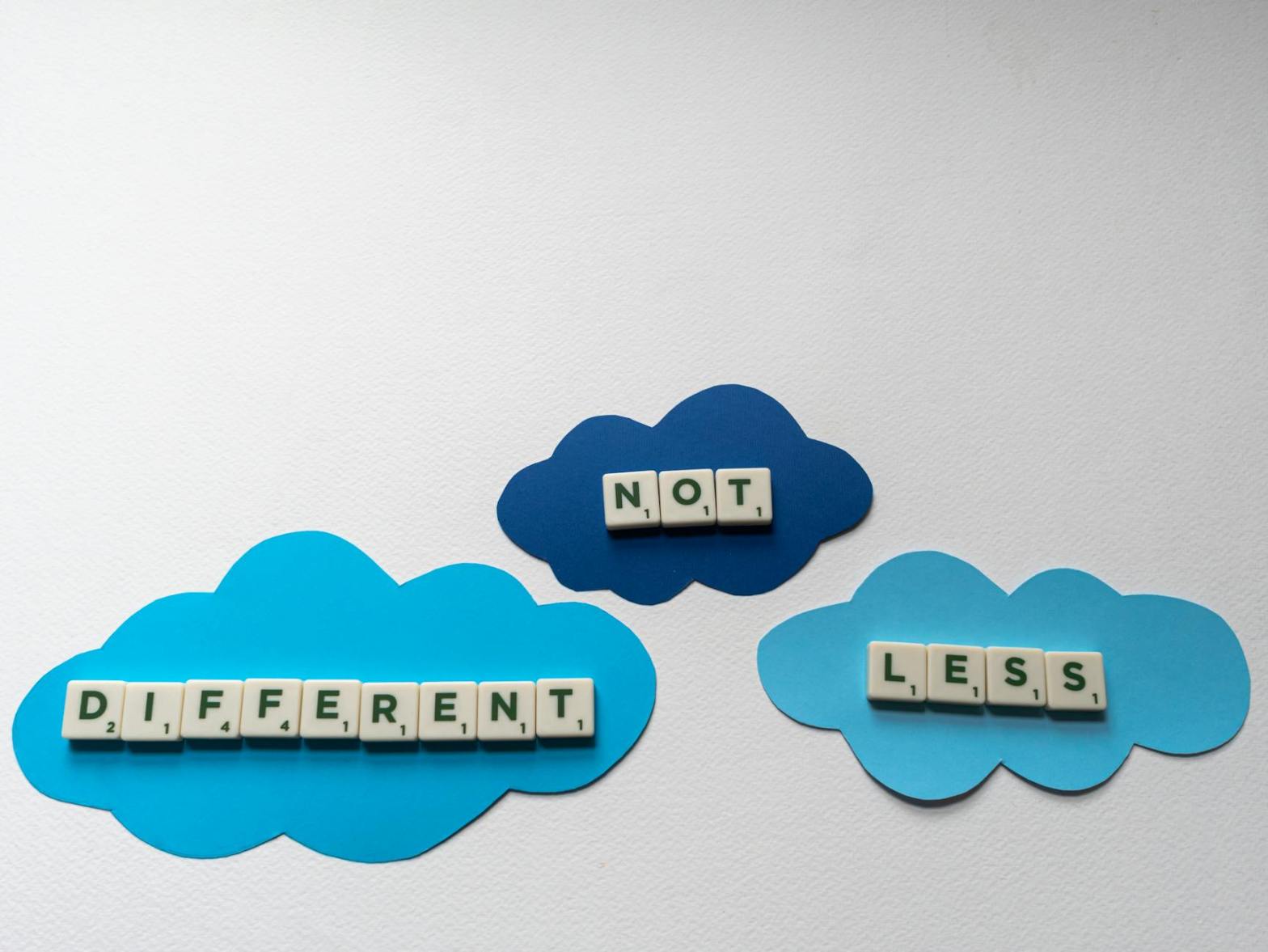
2. Autism is a spectrum. It’s not linear, there’s not ‘a little bit Autistic’, but a cacophony of interests, impacts, and abilities, because we’re all different. Different, not less.
3. Autism is not something to be cured or fixed, but rather something to be celebrated and accepted for what it really is – a different way of experiencing the world.
Thank you for reading.
Sending the Love out.
Steph x
References
Autistica (2025) What is Autism? Sensory Differences [online]. Available from: https://www.autistica.org.uk/what-is-autism/anxiety-and-autism-hub/sensory-differences
Autism Speaks (2025) Making sense of autistic meltdowns in adults [online]. Available from: https://www.autismspeaks.org/blog/autistic-meltdown-adults
Bennie, M. (2018) Executive function: what is it, and how do we support it in those with autism? Part 1 [online]. Available from:https://autismawarenesscentre.com/executive-function-what-is-it-and-how-do-we-support-it-in-those-with-autism-part-i/
Hatch-Rasmussen, C. (2025) Sensory Integration in Autism Spectrum Disorders. [online]. Available from: https://autism.org/sensory-integration/
Moller, R. (2024) The Hyperfocus Connection: Understanding Hyperfixation in Autism [online]. Available from: https://www.abtaba.com/blog/is-hyperfixation-a-symptom-of-autism
National Autistic Society (2025a) Dealing with Change: A Guide for All Audiences [online]. Available from: https://www.autism.org.uk/advice-and-guidance/topics/behaviour/dealing-with-change/all-audiences
National Autistic Society (2025b) Anxiety [online]. Available from: https://www.autism.org.uk/advice-and-guidance/topics/mental-health/anxiety
National Autistic Society (2025c) Obsessions and repetitive behaviour [online]. Available from: https://www.autism.org.uk/advice-and-guidance/topics/behaviour/obsessions/all-audiences
NHS Foundation Trust (2023) Understanding and supporting the social interaction of autistic children and young people [online]. Available from: https://www.newcastle-hospitals.nhs.uk/resources/understanding-and-supporting-the-social-interaction-of-autistic-children-and-young-people/
Prospect Therapy (2025) Exploring Stimming in Adults: Understanding, Normalizing, and Supporting Neurodivergence [online]. Available from: https://www.prospecttherapy.com/blog/2023/12/1/ky0iiakglgb3uj9id5szt1vwa7ics1-wgbhf
The Brain Charity (2025) What is masking, what does it look like and how can it affect people? [online]. Available from: https://www.thebraincharity.org.uk/what-is-masking/
 SmartPonders